Hello, I'd like to start out with a quick recap about myself. My name is Isaac Greeson, I am from an Indiana family farm, and this is my first semester as an agronomy ambassador. This past summer instead of returning to do another internship with the company I interned with last summer, I decided to return home to help my dad on our family farm. I mostly worked on machinery and did landscaping around our house. Not quite as glamorous as my summer internship but it was good to be home.
Being at home for the summer was great, but for all of us that didn't graduate, we must go back to school. Like the transition from summer to fall we to have to make a transition from no school to school. For some this transition seems very easy, for others it can be very hard and takes some time to get back in the swing of things. For me it is the latter. No matter how much I tell myself that I need to be in school mode, I always seem to have a difficult time starting the semester.
I think this is a problem all of us have to some extent, some worse than others. This semester being one of my hardest yet my inability to transition into the semester has hit pretty hard. One of the best thing you can do to combat this tendency is to place yourself into a group of motivated people that create a good atmosphere for you to learn and grow in. If all of your friends just sit around and watch tv on the internet all day, causing you to do the same, then try and find another group of friends that will help you succeed scholastically.
The biggest thing to take away from this post is that distraction is the enemy, keep busy.

Welcome to the Purdue Agronomy/NRES Ambassador Blog. We are current students sharing the day in a life of a Purdue Agronomy or Natural Resources and Environmental Science student.
Tuesday, October 14, 2014

Tuesday, October 7, 2014
Summer Internship with the Indiana Department of Natural Resources
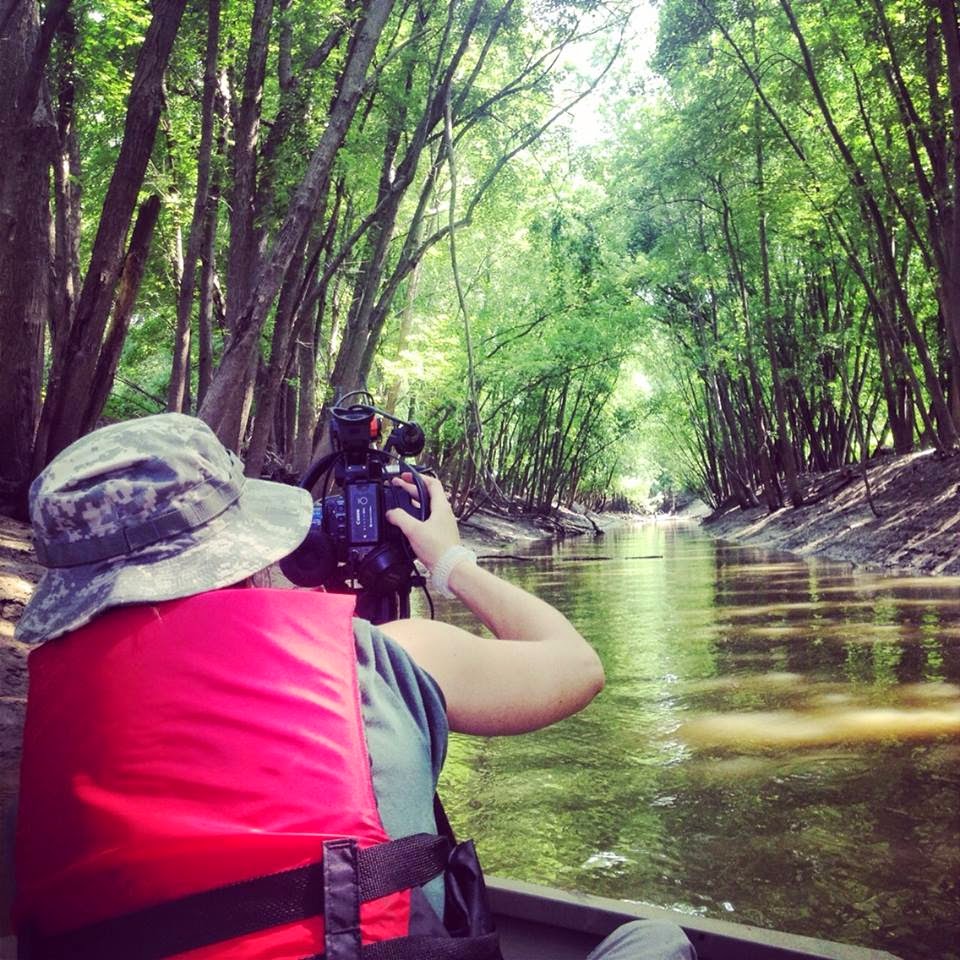
This summer I worked for the Indiana DNR, Division of Communications as the video intern.
The Division of Communications works with the other divisions to promote
and educate the public about Indiana’s state parks, natural resources, and DNR
projects and events.

I worked with
Michael Carney, who is the videographer, editor, and project coordinator for
the IDNR videos. We were in the
office two to three days of the week planning projects and editing
footage. Then we were out of
office the rest of the week and some weekends, “out of office” meaning
capturing video out in nature.

It
was a great experience working for the IDNR and the position really allowed me
to see what all the divisions do and how they are interconnected. Some of my favorite projects that we
did were the #GetINoutdoors campaign (which made it on local news stations for
a couple weeks), Backyard Birding, The Summer Solstice Festival, and A History
Tour of the Wabash River.
VIDEO: A History Tour of the Wabash River
The last video, “A History Tour of the
Wabash River,” was my personal video project. I learned a lot from being able to plan, research, film, and
edit my own project under the supervision of Michael. The Indiana DNR is filled with great people and I had a very
positive work experience. It was tough to leave, but it’s always nice to be back
in Boilermaker territory, applying what I learned this summer to my other
campus video works.
VIDEO: #GetINoutdoors
I “acted” very briefly in one of the campaign videos. We really went in depth with the planning of this campaign and worked hard to coordinate actors, locations, props, as well as the overall concept of the campaign. I was pleased to see it get the attention of the media, and hopefully the attention of some Hoosiers as well.
Friday, October 3, 2014
AGRY 385 Review Game
Hello all,
Today I had an exam in AGRY 385, Environmental Soil Chemistry. While it was a lot of information for one exam, earlier this week my professor, Dr. Lee, did an in class activity that helped a lot in learning the information.


Today I had an exam in AGRY 385, Environmental Soil Chemistry. While it was a lot of information for one exam, earlier this week my professor, Dr. Lee, did an in class activity that helped a lot in learning the information.
Soil Chemistry Cranium!
Dr. Lee put a lot of effort into making several questions about subjects that would be on our exam that fit into the themed question categories of the game Cranium. She also made us breakfast casserole and brownies and brought us drinks! This shows how great the professors are in the agronomy department, and how they truly want you to succeed.
Steve Lira
Soil Chemistry Equations
Sunday, September 21, 2014
Summer as an Interpretative Naturalist- Veronica Yager
Hello All,
My position at the park as the seasonal naturalist allowed me to start my job at the end of May after finals and work through the middle of August before coming back to Purdue to start the fall semester of my sophomore year. My main roles at the park included running the nature center, organizing interpretative programs, assisting in volunteer efforts, and communicating with the general public. This position allowed me grow as leader and develop effective communication skills.
Throughout the summer I did a variety of different programs including the following: snakes, turtles, mammals, tracks, flowers, insects, landforms, tree identification, healthy stream identification, hiking, kayaking, horseback riding, recycling, and more. I learned more during the summer of 2014 then I could have ever imagined about several different aspects of nature.
I was also able to make connections with individuals across the state who worked for the Department of Natural Resources during my interpretative training sessions and inservice training sessions. Thanks to the summer spent working at Versailles, I was able to meet individuals working in state parks all across the state of Indiana and form relationships that will be extremely beneficial when building my career.

The connections and experience that I gained this summer definitely made me realize that Natural Resources and Environmental Science is the right field for me.
Until next time,
Veronica Yager
 |
| Covered bridge at the entrance to Versailles State Park. |
This summer I had the amazing opportunity to work at Versailles State Park in southeastern Indiana as the Interpretative Naturalist. I came across this wonderful opportunity while attending a career fair sponsored by the Forestry and Natural Resource department in the Spring of 2014.
 |
| Versailles State Park had hiking, mountain biking, and horseback riding trails. In order to make sure I could answer questions about all aspects of our park and explore our large property, I was able to bring my horse in and ride the horseback trails. |
My position at the park as the seasonal naturalist allowed me to start my job at the end of May after finals and work through the middle of August before coming back to Purdue to start the fall semester of my sophomore year. My main roles at the park included running the nature center, organizing interpretative programs, assisting in volunteer efforts, and communicating with the general public. This position allowed me grow as leader and develop effective communication skills.
 |
| Interpretative program with the ringneck snake. The ringneck snake will only grow in be about 12'' long at maximum. |
Throughout the summer I did a variety of different programs including the following: snakes, turtles, mammals, tracks, flowers, insects, landforms, tree identification, healthy stream identification, hiking, kayaking, horseback riding, recycling, and more. I learned more during the summer of 2014 then I could have ever imagined about several different aspects of nature.
 |
| Buddy park visit at Clifty Falls State Park. |
The connections and experience that I gained this summer definitely made me realize that Natural Resources and Environmental Science is the right field for me.
Until next time,
Veronica Yager
Thursday, September 18, 2014
Genetic Engineering with Purdue iGEM
Hello, everybody! Hope everyone has enjoyed the first month of what will hopefully be a great semester. Just to quickly introduce myself,
my name is Hailey Edmondson and I am a sophomore in Plant Genetics, Breeding,
and Biotechnology in the Agronomy Department.
This, while most students were enjoying some time
away from Purdue, exciting things were happening on campus! I had the
incredible opportunity to work as a research intern for the Purdue iGEM Team.
iGEM, International Genetically Engineered Machine, is an international
organization of collegiate and high school genetic engineering teams doing
research projects each year and helping to further education and development
surrounding the field of genetic engineering and synthetic biology. Purdue’s
iGEM Team is expanding each year—more members, more complex projects, more
recognition. Each year, teams present their research findings at a competitive
conference called the iGEM Jamboree. Last year, the Purdue iGEM Team placed
third in North America at the regional jamboree in Vancouver, and this year’s
team hopes to continue the trend at Boston’s Hynes Convention Center for the
International Jamboree this November.


Some of our corn plants growing iGEM's lab space is in Bindley Bioscience Center.
in the greenhouse.
This year, Purdue iGEM aimed to tackle an issue that’s
critical in today’s world, and I’m sure we’ve all heard of as people involved
in the agriculture sector—global malnutrition. Our goal was to increase
nutrient uptake in important crops in order to combat extensive malnutrition
that leads to health issues worldwide. Specifically, we targeted iron uptake in
corn and rice plants. In order to do this, we engineered Bacillus subtilis, a
naturally occurring type of soil bacteria, to produce the chemical compound
that corn and rice use to fix and uptake iron from the soil. Our project
focused on exploring a paradigm shift related to modifying microbial soil
ecologies, which is a different approach than directly engineering the plants themselves.

iGEM interns at a barbecue at Westwood, President Daniels' esate.
I worked with 7 other undergraduate interns from a variety
of majors throughout my 10-week internship to create and execute this project.
It was an incredible experience learning about experimental design,
collaboration with faculty and professionals, and teamwork. In addition to
working hard in the lab, we also did some fun social events including a PSUB
Summer Barbecue at President Mitch Daniels’ estate! We are continuing this
project and collecting data up until we go to Boston this November, I’m looking
forward to representing Purdue University and the Agronomy Department!

Members of iGEM representing the team at the College of Agriculture Ice Cream Social.
Tuesday, September 16, 2014
First ambassador meeting of the year!
Hi all,
I just wanted to give everyone a look into a typical (the first this year) ambassador meeting! 
Until next time!
-Kole Kamman
Wednesday, September 3, 2014
Hello all, I hope everyone’s summer
was as great as mine! I was an agronomy sales and marketing intern with Helena
Chemical Company out of Eastern Illinois. Helena is an ag retail supplier. They
sell seed, fertilizer, chemicals and other crop protectant products. On top of
that, Helena has a wide variety of proprietary products that are produced by
Helena themselves.
This summer I did a little bit of
everything. I rode with several different Helena salespeople each week for the
entire summer. On those rides we would either be out on a customer complaint,
checking fields to see if they were able to be sprayed, if the product we
applied was working, and to talk to growers. This opened my eyes to the ag
retail side and how dependent and trusting customers are to their salespeople.
This summer I also did a fair share of scouting and tissue sampling. It was fun
to apply what I learned the spring semester in my plant pathology and weed
science classes to real life experiences when scouting.
 Throughout the three months I
worked for Helena I was given a project to create a Helena proprietary high
yield soybean program. For this, I identified and worked with 2 growers on
about 175 acres where we implemented a high yielding plan. This included two
applications of 4 different Helena products that would help reduce stress,
promote flowering, provide a nutritional, or was a plant growth regulator.
These trails will be taken to yield in the fall to see any benefits that the
application may have provided.
Working for
Helena was a great experience. I received a large amount of hands on training
from the guys I worked with and from many different field days I attended. This
internship allowed me to get a feel for many different pieces of the
agriculture industry whether it was sales, agronomy, marketing, or custom
application.
--Kathryn Graf
Subscribe to:
Posts (Atom)